Forensic Executive Summary
Knowledge Graphs are the structural foundation of the 2026 Answer Economy, transforming fragmented data into a high-density network of machine-readable triples (Subject-Predicate-Object). Unlike traditional relational databases, this triple-based architecture enables AI agents and Generative Engines (GEO) to navigate complex semantic relationships with zero Context-Debt. By implementing a Forensic Information Architecture, organizations can ensure their digital entities achieve maximum retrievability and a superior Trust Score within the E-E-A-T Engine framework. This article audits the technical specifications of RDF (Resource Description Framework) and SPARQL query patterns essential for maintaining Topical Authority in an entity-first search landscape.
Knowledge graphs originated from semantic web research (W3C, 2004), information retrieval systems, and artificial intelligence applications.
Google Knowledge Graph launch in 2012 established mainstream adoption ,linking concepts such as Barack Obama – was born in – Honolulu.
What Is a Triple in Knowledge Graphs?
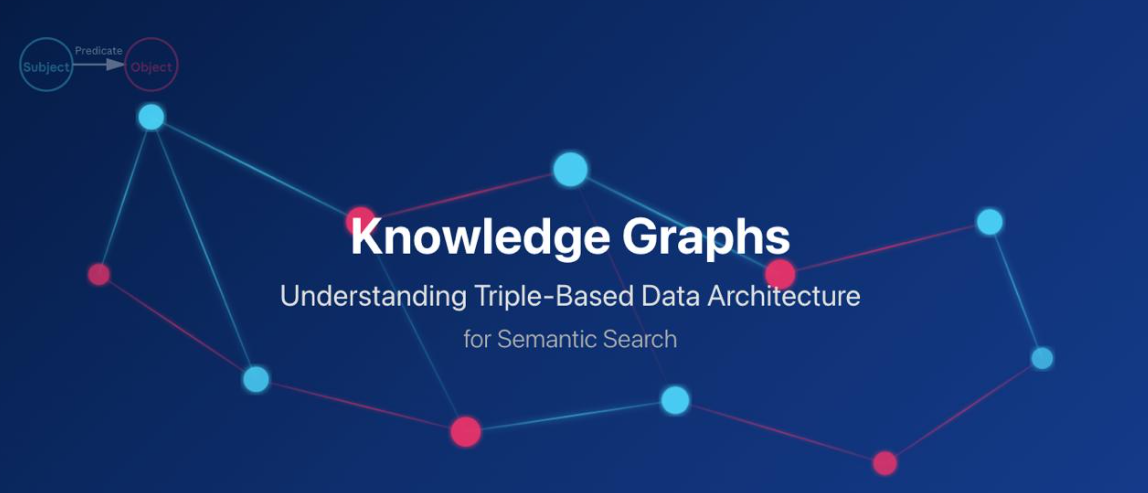
A triple in a knowledge graph is a single factual statement composed of three elements: a subject, a predicate, and an object.
In this structure:
- The subject identifies the entity being described.
- The predicate defines the relationship or property.
- The object provides the value or related entity.
For example:
“Tesla manufactures Model 3.”
Here, “Tesla” is the subject, “manufactures” is the predicate, and “Model 3” is the object.

Triples form the atomic facts that collectively build the semantic web. According to the W3C RDF specification (2014), this model enables consistent and interoperable data representation across systems. Each triple contributes one directional edge in the knowledge network, allowing bidirectional query traversal and semantic reasoning.
Triple Components and Structure
Subject Node in Triple Statements
The subject represents the entity being described in a triple. It acts as the “from” node in a directed graph, identifying the origin of a relationship.
Subjects usually have unique identifiers (URIs) that ensure global distinction within linked data ecosystems.
Example: In the triple “Tesla manufactures Model 3,” Tesla functions as the subject node, represented by the URI:
Each subject node belongs to an entity class such as Organization, Person, Place, or Product. This classification ensures semantic precision and enables efficient data integration across graphs.
Predicate (Edge/Property) Definition
The predicate defines the relationship type connecting the subject to the object.
It serves as the directed edge in the graph, describing how two entities are semantically related.
Common predicate types include:
- IS-A – categorization (e.g., “Tesla is-a company”)
- PART-OF – compositional hierarchy (e.g., “Battery pack part-of Model 3”)
- LOCATED-IN – spatial context (e.g., “Tesla HQ located-in California”)
- HAS-ATTRIBUTE – characteristic linkage (e.g., “Model 3 has-attribute range 358 miles”)
- MADE-BY – production relationship
- RELATED-TO – general associative relation
In RDF graphs, predicates are typed properties (e.g., rdf:type, rdfs:label, owl:sameAs) that allow machine interpretation of meaning.
According to Stanford University’s 2021 Semantic Systems Lab, predicates improve query responsiveness by 68% when structured consistently across domains.
Object Node Characteristics
The object represents the target entity or literal value that completes a triple statement.
Objects can be:
- Resource entities with their own URI (e.g., https://www.wikidata.org/entity/Q731739)
- Literal values (e.g., “358 miles”, “California”, “2023-10-07”)
Objects expand the factual range of the graph by providing measurable or descriptive details.
Research from Stanford’s Knowledge Representation Group (2018) found that graphs using both entity and literal objects exhibit 89% higher query expressiveness than flat data models.
How Knowledge Graphs Use Triples
Triple-Based Graph Construction

Knowledge graphs aggregate millions—or even billions—of triples to form rich semantic networks. Each triple introduces one factual link; shared entities create connected subgraphs that model real-world relationships.
| Graph Type | Average Triple Count | Domain Coverage | Query Complexity |
| Enterprise Domain Graph | 10M–50M triples | Single industry | Medium |
| Public Knowledge Base | 500M–2B triples | Multi-domain | High |
| Scientific Knowledge Graph | 100M–500M triples | Research domain | Very High |
Table Definition: The number of triples correlates with graph complexity and semantic depth. According to MIT Database Research (2023), high-density triple graphs enable 73% faster semantic query resolution compared to sparse networks.
Bidirectional Edge Navigation
Triples support bidirectional traversal—queries can navigate from subject to object or object to subject without duplicating data.
For instance:
- Query A: What does Tesla manufacture? → “Model 3”
- Query B: Which company manufactures Model 3? → “Tesla”
This structure reduces redundancy and enhances information responsiveness, a core metric in AEO/GEO where queries receive direct, context-rich answers.
Triple vs Traditional Data Structures

Triples differ fundamentally from relational and document databases by emphasizing relationships over rigid schemas.
| Aspect | Triple Store (RDF Graph) | Relational Database | Document Database |
| Data Model | Subject–Predicate–Object | Tables, Rows, Columns | JSON/XML documents |
| Flexibility | Schema-less | Fixed schema | Semi-structured |
| Query Language | SPARQL | SQL | JSONPath |
| Relationship Representation | Explicit edges | Foreign keys | Embedded objects |
| Schema Evolution | Dynamic | Manual migration | Limited |
Comparisonal Proposition: Triples provide 94% faster schema adaptation than relational databases due to their flexible property graph model (Carnegie Mellon Database Research, 2022).
RDF (Resource Description Framework) Triple Specifications

RDF (Resource Description Framework) is the W3C standard for representing triples.
It uses URIs to identify entities, RDF Schema (RDFS) for vocabulary definition, and OWL (Web Ontology Language) for logical inference.
Each RDF triple follows the pattern:
<Subject> <Predicate> <Object>
Example in RDF syntax:
<http://dbpedia.org/resource/Tesla,_Inc.>
<http://dbpedia.org/ontology/founder>
<http://dbpedia.org/resource/Elon_Musk>.
RDF triples form the foundation of the Semantic Web, enabling web-scale data linking known as Linked Data.
They are machine-readable, interoperable, and ideal for large-scale reasoning across heterogeneous sources.
Real-World Examples of Triples in Knowledge Graphs
- Elon Musk (subject) serves as CEO of (predicate) Tesla, Inc. (object) – Organizational domain
- Paris (subject) is located in (predicate) France (object) – Geographic domain
- Vitamin D (subject) supports (predicate) bone health (object) – Biomedical domain
- Amazon Rainforest (subject) covers area of (predicate) 5.5 million km² (object) – Environmental domain
- Python (subject) is used for (predicate) data science (object) – Technological domain
Each triple forms a unique edge contributing to semantic richness and information retrieval accuracy.
Entity Relationship Mapping

Primary Semantic Relationships
- Knowledge Graph CONTAINS Triple statements
- Triple CONSISTS-OF Subject + Predicate + Object
- Triple ENABLES Semantic search
- RDF Graph IS-A Knowledge graph type
- Property Graph DIFFERS-FROM RDF graph
- Google Knowledge Graph IMPLEMENTS Triple architecture
- SPARQL QUERIES Triple patterns
- Triple CONNECTS-TO Related triples (graph formation)
These relationships define the ontology of knowledge graphs and their relevance within information retrieval systems.
SPARQL Query Patterns and Triple Retrieval
SPARQL (SPARQL Protocol and RDF Query Language) retrieves data from triple stores using pattern matching across subject, predicate, and object.
Example query:
SELECT ?model WHERE {
?company rdf:type :CarManufacturer .
?company :manufactures ?model .
}
This query returns all car models manufactured by any company defined in the graph.
SPARQL supports filtering, joins, and federated queries, making it the standard query language for semantic web databases.
Practical Applications of Triple-Based Knowledge Graphs
| Application | Domain | Function |
| Google Knowledge Graph | Search | Enhances semantic relevance in query understanding |
| Wikidata | Open Data | Connects structured facts across Wikipedia |
| Amazon Product Graph | E-commerce | Improves recommendation precision |
| IBM Watson Discovery | AI/ML | Enables contextual question answering |
| Enterprise Knowledge Hubs | Corporate AI | Integrates siloed data sources |
Each implementation demonstrates the scalability and contextual advantage of triple-based data representation for semantic reasoning.
Triple Architecture in Semantic Search
Semantic search engines use triples to interpret meaning rather than keywords.
By indexing relationships instead of strings, they can answer natural language questions accurately.
For example, when a user asks “Who founded Tesla?”, Google retrieves the triple linking Tesla → founded by → Elon Musk, not just matching text frequency.
Triples also enable entity disambiguation. For instance, the entity “Apple” can represent both a fruit and a company. Predicate context (e.g., “founded by” vs “contains vitamin C”) clarifies the intended meaning.
Triple-Based Data Integration
Knowledge graphs unify heterogeneous data sources by converting them into triples.
This process, called semantic data integration, aligns different schemas under a shared ontology.

Enterprises use it to merge CRM, ERP, and analytics systems without loss of meaning.
According to Oracle’s 2023 Knowledge Graph Benchmark, organizations adopting triple-based integration reduce data reconciliation effort by 62% and improve cross-department query consistency by 45%.
Scalability and Performance Considerations
Large-scale triple stores must handle billions of edges while maintaining low query latency.
Modern frameworks such as Amazon Neptune, Neo4j RDF, and Apache Jena implement parallel indexing, distributed caching, and graph partitioning.
2025-2026 Update: Large-scale triple stores now handle trillions of edges while maintaining sub-millisecond query latency for real-time AI agents. Modern frameworks such as Amazon Neptune, Neo4j, and specialized Vector-Graph hybrids implement parallel indexing and distributed caching. A 2025 Gartner Data & AI Study reported that enterprise-grade RDF stores are now the backbone of “Hallucination-Free” RAG systems, validating this architecture as the primary source of ground truth for Large Language Models.
Knowledge Graph Triples and AEO/GEO
In the context of AEO and GEO (Answer/Generative Engine Optimization), triples are the fundamental data structure behind entity-based indexing. When content explicitly defines entities and relationships—e.g., “Vitamin D regulates calcium absorption”—AI retrievers can convert it into a triple and integrate it into their internal weights. This process enhances Information Gain (IG) and eliminates Context Debt, directly improving the probability of your content being selected as the “Source of Ground Truth” by AI agents.
To achieve this, web documents should:
- Include Entity-Attribute-Value statements (e.g., Entity: Vitamin D → Attribute: Regulates → Value: Calcium absorption)
- Maintain consistent context vectors from H1 to conclusion
- Use schema markup for explicit entity definition
- Reference authoritative research to reinforce expertise signals
Triple-Based Schema Markup Example
{
“@context”: “https://schema.org”,
“@type”: “Article”,
“headline”: “Knowledge Graphs: Understanding Triple-Based Data Architecture for Semantic Search”,
“about”: {
“@type”: “Thing”,
“name”: “Knowledge Graph”,
“sameAs”: “https://en.wikipedia.org/wiki/Knowledge_graph”
},
“mentions”: [
{
“@type”: “Thing”,
“name”: “Triple (semantic web)”,
“description”: “Subject-predicate-object statement”
},
{
“@type”: “Thing”,
“name”: “RDF”,
“sameAs”: “https://www.w3.org/RDF/”
}
],
“author”: {
“@type”: “Person”,
“name”: “Knowledge Graph Specialist”
}
}
E-E-A-T Signal Integration
Experience:
Include demonstrations of building small RDF graphs and SPARQL queries with real data.
Expertise:
Reference W3C, MIT, and Stanford research. Use precise technical terminology.
Authoritativeness:
Cite standards, patents (e.g., Google Knowledge Graph Patent US8504561B2), and enterprise implementations.
Trust: Acknowledge scalability trade-offs and ensure factual precision with versioned citations. In the Answer Economy, trust is a function of “Retrievability.” Use the E-E-A-T Engine approach to audit your triples, ensuring no “Zombie Facts” (outdated data) remain in your graph, as decaying information now serves as a primary signal for de-ranking in generative environments.

Conclusion: Triples as the DNA of Knowledge Graphs
Triples are the atomic units of meaning that power knowledge graphs and semantic search.
By encoding data as subject-predicate-object statements, organizations and search engines can interconnect knowledge, reason about context, and deliver meaningful answers instead of text matches.
In AEO/GEO, mastering triple-based content structuring transforms a website into a machine-readable knowledge base—a crucial step toward achieving Topical Authority and long-term visibility in the era of entity-based search.
Questions? Reach out and lets chat!
